Small-Space Sleep · Mattress Materials
Dunlop Latex Explained: Feel, Resilience, and Small-Room Sleep
In a compact bedroom, every choice has to earn its place. A mattress must feel inviting, fit the room, and work with the way you move through it. Dunlop latex is often considered for its buoyant response and supportive character—but those qualities are only part of the story. Firmness, construction, bed dimensions, and practical setup all shape whether it makes sense for your space.
The appeal of a mattress that answers back
Some mattress materials seem to welcome you with a slow, enveloping softness. Latex tends to offer a different kind of comfort: responsive, springy, and comparatively quick to recover after pressure is removed. Rather than leaving a pronounced impression that takes time to rebound, latex generally gives the body a sense of buoyant support. The result can feel gently lifted instead of deeply cradled.
Dunlop is one of the established processes used to make latex foam. The finished material is often described as dense and substantial, though that shorthand should not be mistaken for a guarantee of one precise feel. Products differ in formulation, layer thickness, firmness, and how the latex is combined with other materials. A mattress described as “Dunlop latex” could therefore feel quite different from another mattress with the same broad label.
For a small bedroom, this responsive quality has an appealing practicality. The bed may also serve as a place to read, fold laundry, or sit while getting dressed. A surface that pushes back rather than swallowing the body can feel easier to move across and may suit people who prefer a more buoyant sensation. But personal comfort is not a matter of material prestige. The right mattress is the one whose support and pressure feel work for the sleeper, in the actual room where it will live.
What Dunlop means—and what it does not
Dunlop refers to a method of producing latex foam, not a universal firmness rating or a promise of a particular sleep experience. In broad terms, liquid latex is foamed, placed into a mold, and processed into a solid form. Manufacturers can vary the recipe and the finished product’s density and firmness. They may also cut the material into layers and combine it with wool, cotton, other latex, or additional mattress components.
That variation matters because firmness is not determined by the name of the process alone. It can be affected by the foam’s formulation, the thickness of each layer, the surrounding upholstery, and the foundation beneath the mattress. The same latex core can feel different when placed on a flexible base than it does on a rigid platform. Add a plush quilted top and the first impression may soften; use a firmer, simpler construction and the surface may feel more direct.
It is also useful to separate “natural latex” from “Dunlop.” The first describes material sourcing or composition, while the second describes a manufacturing approach. Product descriptions may use more than one term, but a buyer should check the specific construction details rather than assume that a process label alone answers questions about ingredients, certifications, or overall material content.
When comparing mattresses, look for clear information about the number and thickness of layers, the stated comfort level, the cover and quilting materials, and the recommended foundation. If those details are missing, ask for them before making a decision. A polished label can introduce a material; it cannot tell you whether the mattress will suit your body or your room.
The feel: buoyancy, pressure, and personal preference
Latex is often chosen by sleepers who enjoy a little spring in the surface. It can feel lively under a change in position, rather than slow-moving or heavily contouring. That characteristic may appeal to people who want to shift easily between sleeping positions, or who simply dislike the sensation of being deeply sunk into a mattress. Others may prefer the closer, slower contouring associated with different materials. Neither preference is more correct; they are different ways of experiencing comfort.
Support and pressure relief are not opposites, but a mattress has to balance them for the individual sleeper. A surface that feels comfortably firm when sitting may create pressure at the shoulder or hip when lying on one’s side. A mattress that initially feels plush may not feel sufficiently supportive over a full night. Body shape, sleeping position, personal sensitivity, and the mattress’s underlying construction all contribute to the experience.
Firmness labels are useful as a first filter, not a final verdict. “Medium” and “medium-firm” are not universally standardized descriptions, and people can interpret the same mattress differently. If you share a bed, account for each sleeper’s comfort needs instead of choosing solely by a single label. A showroom trial, a clear return policy, and careful attention to the manufacturer’s setup guidance can help reduce guesswork.
Think about the way you like to settle into bed. Do you prefer the surface to conform closely, or do you want a more lifted sensation? Do you wake easily when changing positions? Do you tend to sleep on your side, back, stomach, or a combination? These questions are more useful than choosing a material because it sounds inherently luxurious. The best material is the one that makes your ordinary bedtime feel better.
Resilience in everyday use
Resilience is latex’s capacity to respond to pressure and return toward its previous shape. In practical terms, the surface tends to feel lively rather than inert. When you rise, move, or shift position, the material responds quickly. This can make a bed feel more accessible and less enveloping, particularly for people who find heavily contouring surfaces cumbersome.
Resilience is not the same as guaranteed durability. Longevity depends on the materials and construction as a whole, how the mattress is supported, how it is cared for, and how heavily it is used. A thick latex layer in a well-constructed mattress is not automatically a better choice than every alternative, nor does a natural-material description replace the need to review a warranty and care instructions. Check the details of the specific mattress rather than relying on broad claims about an entire material category.
There is also a difference between resilience and motion isolation. A responsive surface may transfer some of the sensation of movement differently from a slow-response foam. Whether that matters depends on how sensitive you or a bed partner are to movement, the mattress design, and the structure of the bed. If undisturbed sleep is a priority, consider the complete mattress rather than inferring performance from the latex layer alone.
In a small room, the practical benefit of a responsive surface can be as much about daily use as nighttime comfort. A bed that is easy to sit on and get off can make a tight layout feel less awkward. Still, mattress height, edge construction, and the distance between the bed and nearby furniture also shape how graceful the room feels in use.
Ventilation and the sleep environment
Latex is often associated with an open, breathable feel, but temperature comfort is influenced by more than the core material. The cover, quilting, protector, sheets, room temperature, airflow, and bedding weight all contribute. A mattress can contain latex and still feel warmer to a particular sleeper if its surrounding layers and bedding restrict airflow or retain heat.
In a compact bedroom, ventilation deserves a little extra thought. A bed pushed close to a wall or fitted tightly into an alcove may have less air movement around it than a bed with open clearance on several sides. That does not make the arrangement unsuitable, but it is worth leaving whatever space the manufacturer recommends and avoiding a setup that traps moisture against a wall or enclosed platform. Follow the care guidance for the mattress and foundation, and keep the sleeping area clean and dry.
Use breathable bedding that suits the season and your preferences. A mattress protector can help guard against everyday wear, but its fabric and construction can change the feel of the surface. Choose one that fits the mattress depth securely and review its washing instructions. A bulky or poorly fitted layer may bunch, stretch, or alter the mattress’s intended comfort.
Good ventilation is not a substitute for comfort testing, and no material can promise a cool night under every condition. If you tend to sleep warm, consider the entire sleep system: mattress, protector, sheets, comforter, and room airflow. Small adjustments to bedding weight and circulation can sometimes make a more noticeable difference than changing one component in isolation.
Small-room planning begins with measurement
A mattress may be beautifully constructed and still be wrong for a compact bedroom if it overwhelms the floor plan. Measure the room before choosing the bed size. Record the locations of doors, closets, windows, radiators, outlets, and any built-in storage. Then mark the bed’s footprint on the floor with painter’s tape or a simple paper plan. This modest step makes it easier to judge circulation before a bulky item arrives.
Account for more than the mattress itself. The bed frame or foundation can add height and width, while a headboard, side rails, or adjustable base may affect the overall footprint. Bedding also needs room to hang and be changed. Leave a practical route to the door and closet, and consider whether drawers, wardrobe doors, or bedside storage can open without colliding with the bed.
Mattress dimensions are standardized in many markets, but the usable space around a mattress is not. A full-size bed may provide welcome room for one sleeper while leaving little clearance in a narrow room; a smaller size may preserve movement but feel restrictive. Decide which comfort trade-off matters most. The ideal choice is not necessarily the largest mattress that can physically fit. It is the one that leaves enough room for the bed to function as part of a livable bedroom.
Also consider ceiling height and the route from the entrance to the final location. A latex mattress can be heavy and awkward to maneuver, depending on its size and construction. Measure hallways, stair turns, elevators, and door openings before arranging delivery. Ask the manufacturer or retailer about handling requirements, packaging, and whether the mattress can be moved by the people available to you. A plan that works on paper should also work on moving day.
Foundation, clearance, and setup
The foundation is part of the mattress system. A slatted platform, solid platform, box spring, or adjustable base can affect the feel and performance of a mattress, and not every mattress is designed for every foundation. Review the manufacturer’s instructions for slat spacing, weight limits, and compatibility before assembling a bed. A foundation that does not provide the required support may affect both comfort and warranty coverage.
In a compact room, a low-profile platform can make the space feel calmer and visually less crowded. A taller bed, however, may offer useful under-bed storage or make getting in and out more comfortable. The right height depends on the room’s proportions and the sleeper’s needs. Remember that the mattress’s full height includes the foundation, frame, and any topper or pad.
Leave enough clearance to change sheets, inspect the bed, and clean around it. If one side sits against a wall, consider whether you can still tuck in bedding and access the far edge when needed. For a bed placed in a closet-like alcove, verify that the space allows airflow and that the mattress will not press tightly against surrounding surfaces. Follow specific setup and ventilation guidance from the mattress maker.
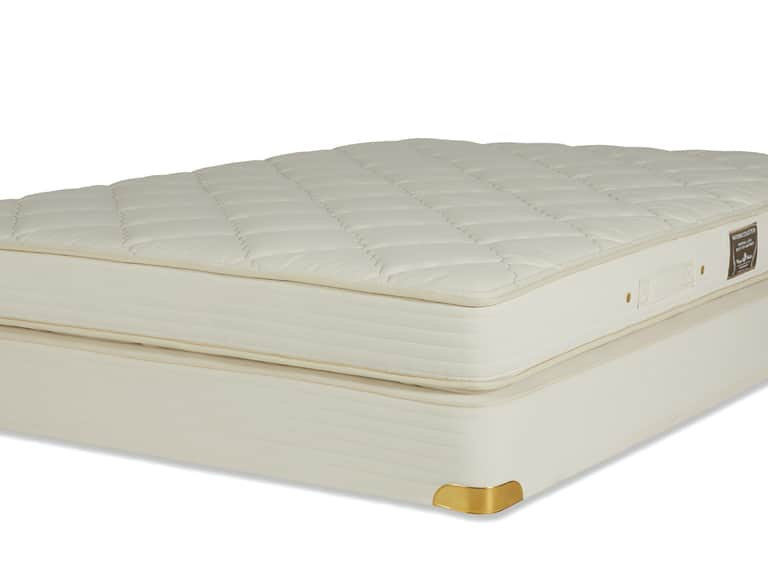
Those seeking a latex example with a clearly described layered build can review the Royal-Pedic Natural Latex Quilt-Top Mattress. Its listed construction includes an eight-inch latex core with a firm layer and a medium layer, surrounded by French wool and cotton. The product information says it can be used on a platform, box spring, or adjustable bed base; shoppers should confirm that their own foundation meets the manufacturer’s requirements and that the mattress’s dimensions suit their room.
A thoughtful checklist before choosing
When product descriptions start to blur together, return to a handful of practical questions. They create a more useful comparison than marketing language alone and keep the room’s constraints in view.
- What is the complete construction? Note the latex layers, their thicknesses, the cover, any quilting, and other materials.
- How is the feel described? Treat firmness terms as a starting point and compare the mattress with your own comfort preferences.
- What foundation is required? Confirm compatibility, slat spacing, and any other support instructions.
- Does the full bed fit? Measure the frame, mattress, headboard, and necessary walking and storage clearances.
- Can it be delivered and moved? Check the route into the room, packaging, handling advice, and delivery arrangements.
- How should it be cared for? Review cleaning directions, protector recommendations, warranty terms, and return conditions.
- Will the sleep system suit the room? Consider bedding, airflow, humidity, storage, and the way you use the bedroom throughout the day.
These details matter especially when buying online, where a product description can make a mattress sound more definitive than it is. Look for transparent specifications and ask questions when a key detail is missing. A retailer’s answer should clarify the construction or setup, not simply repeat an adjective such as “supportive.”
Making a compact bedroom feel considered
Small-room design does not have to mean accepting a bedroom that feels merely functional. The most successful layouts give the bed a clear purpose while protecting the room’s movement and visual quiet. Keep essential paths open, choose bedside furniture with a scale that fits, and avoid treating every spare inch as a storage opportunity. A room can be efficient without feeling crowded by its own solutions.
Where possible, align the bed with the room’s natural geometry rather than forcing it into a position that blocks a door or closet. If a single bedside table is all the floor plan allows, make it useful and keep the opposite side accessible enough for regular bedding changes. Wall-mounted lighting or a shelf may free floor area, but installation should be safe and appropriate for the space. The goal is to make routines easy, not to add complexity in the name of minimalism.
Consider the mattress in relation to the whole room’s mood. A responsive latex surface may offer the satisfying, lifted feel some sleepers prefer, while breathable natural-fiber bedding can keep the ensemble simple. A neatly fitted protector, well-sized sheets, and a comforter chosen for the season help the bed feel polished without adding unnecessary layers. Good design is often less about adding more and more about making each element work.
The final measure is how it feels to live with
Dunlop latex has a distinctive reputation for resilience and buoyancy, but the name alone cannot predict whether a mattress will feel right. Construction, firmness, foundation, and the sleeper’s own preferences all matter. In a compact bedroom, those questions sit beside equally practical ones: how the bed fits, how it will be delivered, whether bedding can be changed easily, and whether the room retains enough space for daily movement.
Approach the choice as both a comfort decision and a room-planning decision. Start with measurements. Compare the full construction rather than the headline material. Check the foundation requirements and the care instructions. Then give proper weight to your personal sense of comfort—because the most elegant small bedroom is not simply the one with the cleverest layout. It is the one that makes rest feel natural.
With that perspective, latex becomes neither a trend to follow nor a promise to buy into. It is one material among several, with a responsive character that may suit particular sleepers and spaces. Choose it when its feel, construction, and practical demands align with the life of your room, and let the rest of the bedroom support that decision with clarity and ease.